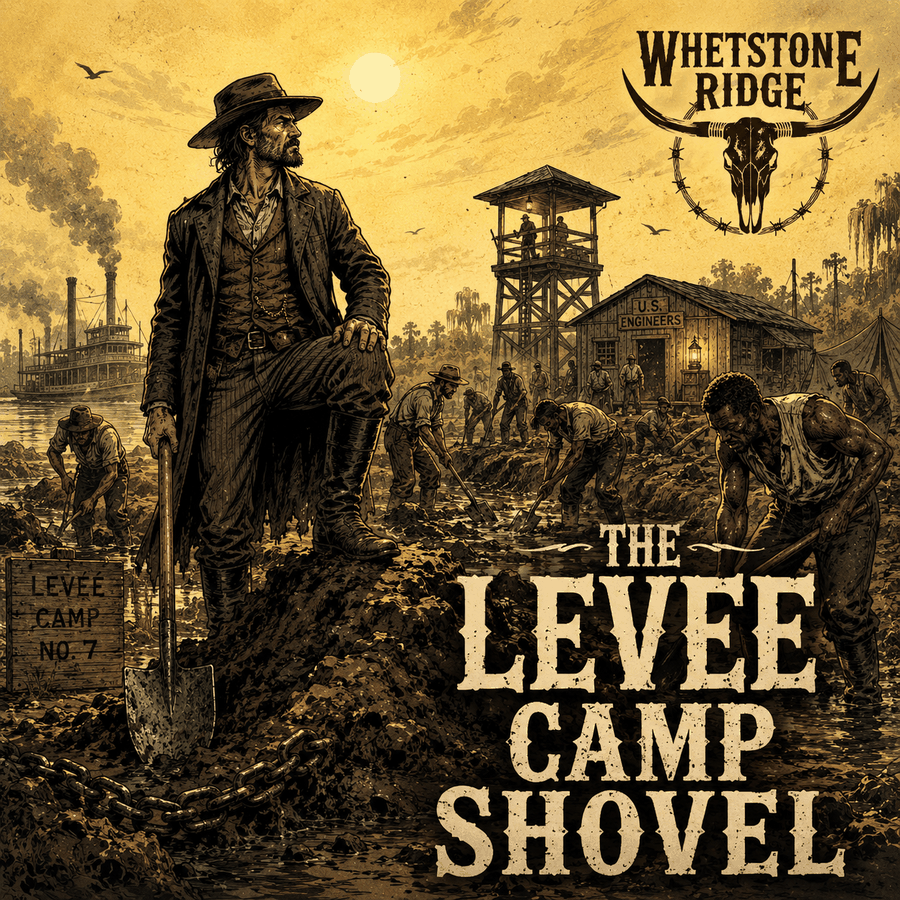
This is the heaviest song we have recorded, and we did not take it lightly. Cole came across the story of the Mississippi levee camps while reading about convict leasing, the system that took men off the street on the thinnest charges and rented them out to work in the mud. The records were short and cold. Names without faces, numbers without graves. He started wondering what a man who ran such a camp would hear on the night the river finally came for him, and the song became a ghost story told from the villain's side.
We decided early not to sentimentalize it and not to make it a costume. The narrator is the foreman, proud and cruel, building a wall to lock the great river out of his delta town. The horror is that he thinks he is a hero. Only at the end does he realize that it is not water breaking through the levee, it is the dead, digging with their fingers. Jack wanted the guitar to sound like the creak of timber and the slow groan of a steam pipe, and he spent most of a day finding the right slide tone.
The band stayed unusually quiet during the sessions. Hank, who usually makes a joke when the mood gets heavy, instead played a slow and merciless pulse and told us afterwards he did not feel right laughing that week. For the bridge we stacked every voice in the band into a gospel-style wall so that the dead could sound like a congregation. When the last splash of water fades out and the drum thuds once, we all just stood there.
In Their Words
Five Men, One Song
We sat the band down after the last take and asked each of them about this one. This is what came out.
Why write from the foreman's point of view?
“Because the people he wronged don't need me to give them a villain. They need me to show the villain being afraid. I wanted him to hear what he'd done. That felt like the closest thing to justice a song can offer.”
How did you find that slide sound?
“I wanted it to sound like the river was complaining. I ran the slide up and down a rusty iron bar for fun until Cole said, stop, use that. That is a very true sentence and I'm not telling you which bar.”
This is a heavy one. How did you approach it?
“With respect. I played slow, I played low, and I stayed out of the way of the story. Some songs need a bass player who knows when to disappear into the mud.”
You didn't make any jokes this week.
“Correct, and you should take that as a medal for the song. Some stories deserve silence and a good steady beat. I've been in rooms where nobody should talk. This was one of them.”
What do you hope listeners take from it?
“That the ground remembers. You can pile clay over a trench as high as you like. Something always comes back for the account. I think it's a hopeful song in a terrible way.”
The Words
Lyrics
Eighteen-eighty-four in the Mississippi mud
The river was hungry, tasting for blood
I was the foreman, the king of the camp
Driving the convicts under the swamp-gas lamp
"Dig it deeper, boys, or taste the leather strap!"
We built the levee, trying to shut the river's trap
A thousand Irishmen, a thousand broken slaves
We piled the heavy clay over their nameless graves
The water is rising, the willow trees shake
Listen to the promise that the black waters make
I hear the steam-pipes moan, I see the timber bend
But I built this wall of earth to the river's end
Oh, shovel the dirt till the levee stands high!
We build the mountain under a yellow sky!
The Mississippi roars against the iron steel
But I'm the only master that this valley's gonna feel!
Yeah, stack the mud, don't you dare to look down
I locked the great river out of this delta town!
Midnight watch on the crest of the wall
The rain is a-falling, the night-birds call
The brown water bubbles right under my boots
Sucking the soil from the cypress roots
The levee is cracking, the foundation yields
But it ain't just water flooding the cotton fields
It's the bones of the dead that we threw in the trench
Rising from the bottom with a fever-swamp stench
They aren't breaking under the river's great weight!
The dead men are pushing through the wooden water-gate!
Every man I starved, every man I let drown
Is digging with their fingers to tear my levee down!
The shovel in my hand won't stop the rising flood
The ghosts of the camp are taking back the mud!
Oh, shovel the dirt till the levee stands high!
We build the mountain under a yellow sky!
The Mississippi roars against the iron steel
But I'm the only master that this valley's gonna feel!
Yeah, stack the mud, don't you dare to look down
I locked the great river out of this delta town!
The wall is breaking... the water takes my breath
No more convicts... nothing left but death
Down in the levee camp mud
Between the Lines
What the Lyrics Are Really Saying
The Levee Camp Shovel opens with a date and a river. Eighteen-eighty-four, Mississippi mud, a river hungry and tasting for blood. The narrator introduces himself as the foreman, the king of the camp, driving convicts under a swamp-gas lamp. The tone is boastful and chillingly casual, and it establishes the moral trap of the song: the listener is made to sit inside a cruel man's confidence. His orders, dig it deeper or taste the leather strap, are delivered like a job description.
The details accumulate into an indictment. A thousand Irishmen, a thousand broken slaves, nameless graves under heavy clay. Without ever raising its voice the song states what the foreman refuses to see: the wall he is proud of is built on bodies. When he boasts that he has locked the great river out of the delta town, the chorus becomes darkly ironic. The yellow sky, the mountain of mud, the iron steel, they are the symbols of a man who believes he has beaten nature and history in the same afternoon.
The second half turns the tables. Midnight watch on the crest of the wall, brown water bubbling under his boots, sucking the soil from the cypress roots. The levee is cracking, but the foreman senses that it is not only water flooding the cotton fields. It is the bones of the dead that were thrown into the trench, rising with a fever-swamp stench. The imagery is gothic, but it carries real weight, because it is rooted in a truth: buried things do not stay buried.
The bridge is the climax, and it is sung like a hymn gone wrong. The dead men push through the wooden water gate, every man the narrator starved and let drown is digging with his fingers to tear down the levee. The shovel in his hand will not stop the flood, and the ghosts are taking back the mud. The final lines deliver the verdict without a word of moralizing. No more convicts, nothing left but death, down in the levee camp mud. It is a song about accountability, told by the one voice that had been avoiding it.