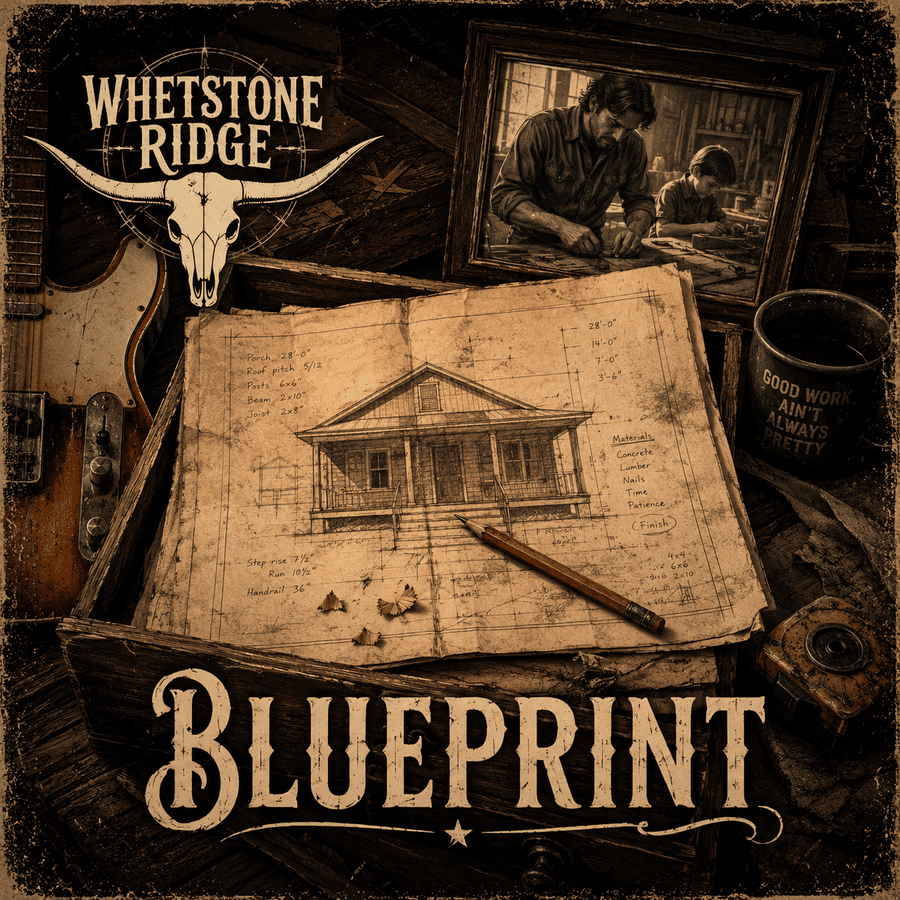
Blueprint began with a drawer. Cole's father, like a lot of men of his generation, never said much about his feelings but left behind a toolbox full of them: pencils worn to the nub, scraps of paper with measurements, a plan for a porch that never got built. Cole found the plan years after the funeral and sat on the floor of a spare room holding it up to the light, as if the paper might say something the man never did. It did not. But the handwriting was his own.
That is the sentence the whole song grew from: same slant to the letters, same pressure on the page. He was thirty-something, with children of his own, and watching his young son pick up a pencil on a Saturday and draw a house with crooked walls and the porch the right way. The inheritance was not money. It was a way of holding a hammer, a habit of leaving things half done at the edge of anger, a way of loving people badly and hoping the love got through.
We recorded it slowly and without drums for the first half. Jack used a wah-wah Telecaster played so softly it sounds wet, and Dean found a fuzz bass tone that rumbles like a truck idling in the next room. The band was unusually quiet in the studio. When Cole sang the bridge, about finishing the porch with his father's measurements and never telling anyone why, Wade quietly left the room, came back five minutes later, and played the last chord with his eyes closed.
In Their Words
Five Men, One Song
We sat the band down after the last take and asked each of them about this one. This is what came out.
Is the porch real?
“Yes. It took me three years and a lie, the way the song says. It isn't level and it isn't square. My daughter eats her cereal on it every summer and says it's the best seat in the house. I haven't had the heart to fix it.”
Why did you leave the room during the bridge?
“Because my dad built things too. Some songs reach in and find the drawer you didn't know you had. I came back, I did my job, and I'd do it again.”
How did you approach the guitar?
“Gently. A wah-wah that barely opens, a Telecaster that sounds like it's apologizing. I wanted it to feel like handwriting, a little shaky, a little tilted, completely yours.”
You use a fuzz tone here.
“It sounds like a low motor in the next room. It's the thing you hear when someone you love is working in the garage and you're in bed. That sound is home. I tried to find it.”
Did you sit this one out?
“On the first half, yes. My dad was a carpenter who never once said 'I'm proud of you' out loud. When the drums come in on the second chorus, that's me saying it back.”
The Words
Lyrics
I found his handwriting in the back of a drawer
Measurements for a porch he never built before
Numbers in the margin where the pencil bled through
The blueprint of a man I thought I never knew
Same slant to the letters, same pressure on the page
Same way of leaving things half-done at the edge of rage
I held it to the light like it might tell me something new
Just saw my own hand in everything he drew
I've started a hundred things and left them in the wall
Measured twice, cut once, then didn't finish at all
My daughter watches me the way I watched him then
Waiting for the hammer - waiting for the end
You don't choose the blueprint
It chooses you
Every line your father drew
Is already in you
Blueprint in the bloodline
Blueprint in the bone
Blueprint in the way I build
And tear down everything I own
He left me his unfinished rooms
I'm leaving mine the same
Blueprint - running through us
Like a river with no name
My son picked up the pencil on a Saturday in May
Drew a house with crooked walls and a porch the right way
I didn't say a word - just watched the angle of his hand
The blueprint passing forward like it always had a plan
You don't choose the blueprint
It chooses you
Every line your father drew
Is already in you
I finished the porch last autumn
Took me three years and a lie
Used his measurements from that drawer
Never told anyone why
It ain't level and it ain't square
But it holds the weight just fine
Sometimes the blueprint's wrong
And it's still the right design
Blueprint in the bloodline
Blueprint in the bone
Blueprint in the way I build
And tear down everything I own
He left me his unfinished rooms
I'm leaving mine the same
Blueprint - running through us
Like a river with no name
The pencil marks are fading now
But the porch is holding still
Blueprint
Between the Lines
What the Lyrics Are Really Saying
Blueprint is a song about inheritance, and its first verse is a masterpiece of specificity. A son finds his father's handwriting in the back of a drawer: measurements for a porch that was never built, numbers in the margin where the pencil bled through. The phrase the blueprint of a man I thought I never knew carries two meanings, the literal plan on the page and the figurative design of a personality. He is holding a document that explains the architecture of his own life.
In the second verse the realization sharpens. Same slant to the letters, same pressure on the page, same way of leaving things half done at the edge of rage. He holds the paper to the light as if it might tell him something new, and all he sees is his own hand. This is one of the most honest moments in the catalog, because it names the fear underneath the whole song: that we become what we most wanted to avoid. The third verse confirms it. He has started a hundred things and left them in the wall, and now his daughter watches him the way he once watched his father, waiting for the hammer.
The pre-chorus is a statement of fate: you do not choose the blueprint, it chooses you. Every line your father drew is already in you. Then the chorus turns that fate into a river with no name, running through the family, building and tearing down at once. The word that matters here is unfinished. He leaves his rooms unfinished the way his father left his, and the repetition makes the cycle feel inevitable. The song is a confession, but it is also a warning to the next generation, which turns up in the fourth verse as a boy with a pencil and the porch drawn the right way.
The bridge is where the song breaks the pattern. He finishes the porch. It takes three years and a lie, and he uses his father's measurements without telling anyone why. It is not level and it is not square, but it holds the weight just fine. The last couplet is the thesis: sometimes the blueprint is wrong, and it is still the right design. The ending is a whisper. The pencil marks are fading, but the porch is holding still. It is a song about forgiving the person who shaped you by completing what they could not.